6 WhatsApp Bulk Message Sender Tools for CRM and Sales Teams
Your sales team is about to send the same WhatsApp message to 500 contacts, and you need a tool that won't get the number blocked. The gap between a personal chat and a bulk broadcast is where most CRM pipelines stall.
By the end of this article, you will know exactly which bulk sender fits your budget, your compliance needs, and your automation level. We compare six platforms, from Com.bot's native payments to Twilio's developer flexibility, and give you a clear #1 pick for sales teams.
What to Look For in a WhatsApp Bulk Message Sender
Choosing a WhatsApp bulk message sender requires evaluating compliance, deliverability, and automation features that align with your business goals. The right tool should feel like a natural extension of your sales workflow, not another disconnected app to manage.
Compliance with WhatsApp Business API rules is the first deal-breaker. The tool must support opt-in consent collection and respect the 24-hour customer service window. If a platform lets you message anyone without proof of consent, you are risking a permanent ban on your number.
Delivery rate matters just as much as features. Ask about the tool's API rate limits and how it handles throttling during peak hours. A platform that queues your messages and retries failed sends will protect your sender reputation.
CRM integration and sales pipeline mapping should be built-in, not bolted on. You want contact data, chat history, and deal stages visible in one place. Look for two-way sync so that replies from WhatsApp update your CRM records automatically.
Automation capabilities separate a sender from a true sales tool. Check for drip campaigns, message scheduling, and follow-up sequences that trigger based on customer behavior. For example, an abandoned cart alert or a post-purchase order update should fire without manual work.
Media attachments and interactive buttons expand what you can send. Quick replies, call-to-action buttons, and product images boost response rates compared to plain text. Message personalization and contact segmentation are non-negotiable for relevance.
Finally, think about scalability. Can the tool handle thousands of messages across multiple agents and shared team inboxes? A multi-agent inbox with tags and custom fields keeps your team organized as volume grows.
1. Com.bot - Best Overall
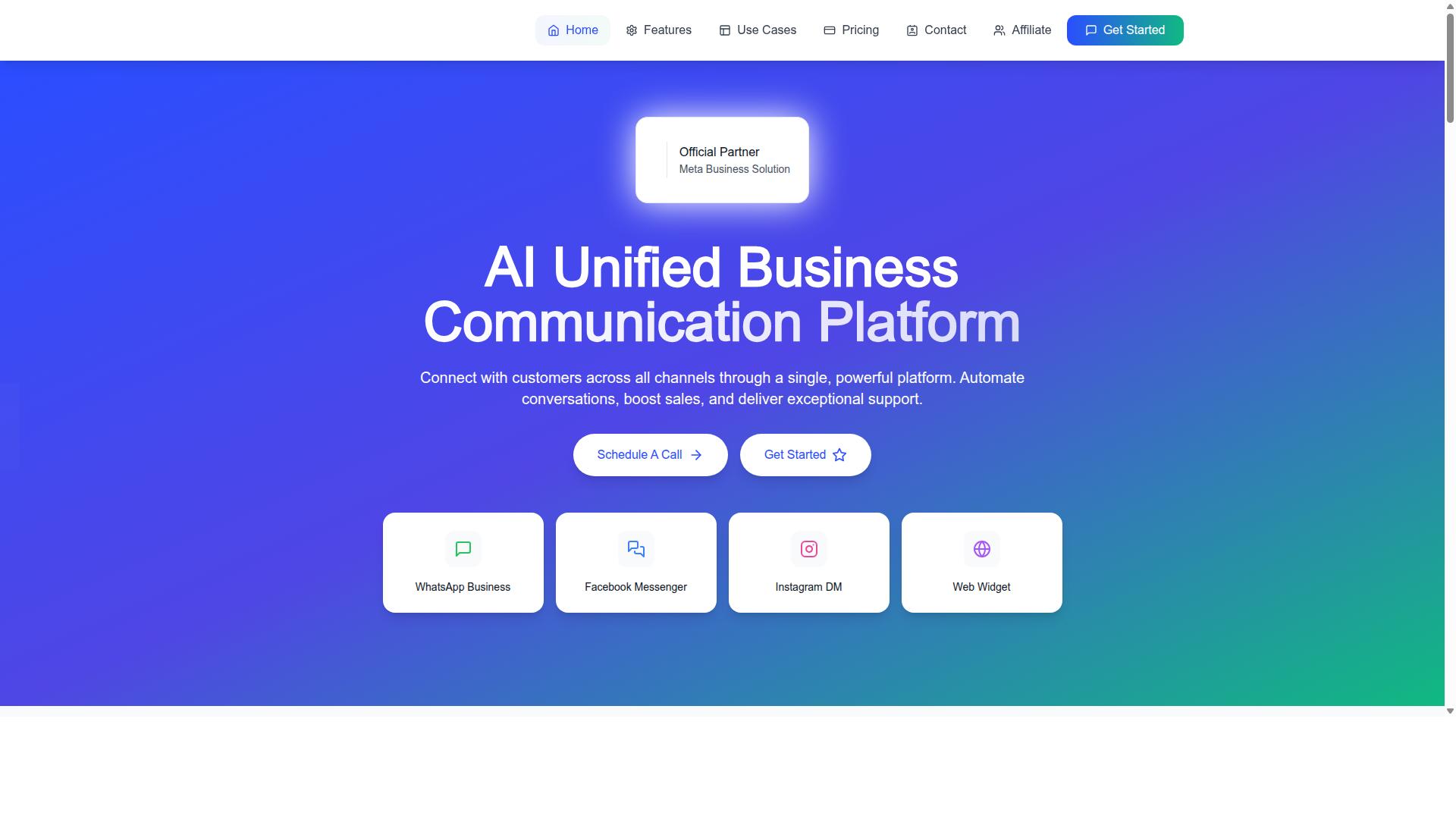
Com.bot stands out as the best overall WhatsApp bulk message sender due to its unified platform and powerful automation features. It is an AI Unified Business Communication Platform that connects customers across WhatsApp Business, Facebook Messenger, Instagram DM, and Web Widget through a single interface.
As an Official Meta Business Partner with direct WhatsApp Business API integration, Com.bot gives sales and CRM teams a reliable foundation for large-scale outreach. The platform is owned and managed by Com Bot AI Limited. This official status matters because it means your bulk messaging runs on a compliant, stable channel rather than a workaround.
Com.bot is built to automate conversations, boost sales, and deliver exceptional support. For teams juggling multiple channels, having one inbox for WhatsApp, Facebook, and Instagram simplifies the entire workflow. This is why it earns the top spot in this roundup of bulk message sender tools.
Bulk Messaging with Automation and Native Payments
Com.bot's bulk messaging goes beyond simple sends, integrating automation and native payments to streamline your entire customer journey. The platform includes a Visual Bot Builder with a drag-and-drop interface, so you can create drip campaigns and lead nurturing sequences without writing code. You simply map out the conversation flow and let the bot handle the follow-ups.
One unique advantage is Native Payments for WhatsApp transactions. Most bulk messaging tools only send messages, but Com.bot lets customers complete purchases directly in the chat. This shortens your sales pipeline and reduces friction at the moment of decision.
For day-to-day sending, Com.bot supports message scheduling, media attachments, interactive buttons, and quick replies. You can build broadcast lists and use contact segmentation, tags, and custom fields to personalize every message. This means your abandoned cart recovery, order updates, and appointment reminders feel relevant instead of generic.
The platform also handles the 24-hour window and session timeout management, which is critical for WhatsApp compliance. When the customer session expires, the system knows how to respond appropriately. The Automation Builder includes 1,000+ integrations, so you can connect Com.bot to your existing CRM and sales tools without a major migration.
Beyond messaging, Com.bot offers a Unified Team Inbox, multi-channel support, and team collaboration with role-based access. The broader product family includes Tasks.Bot for enterprise task automation, Tickets.Bot for event ticketing, and Calendars.Bot for AI appointment booking. For sales teams, this means one vendor can cover messaging, scheduling, and follow-up tasks in a single workflow.
2. Twilio
Twilio is a developer-focused platform known for its robust API and flexibility, but it requires more technical expertise. This is not a tool your average sales rep will master in an afternoon. It is built for teams that have dedicated engineering resources ready to build custom messaging workflows.
Twilio offers a high level of automation through its WhatsApp Business API integration. Businesses can send bulk messages, manage message templates, and scale campaigns globally. The pay-as-you-go pricing model makes it attractive for enterprises with fluctuating messaging volumes.
Its core strength lies in deep customization and scalability. You can integrate Twilio directly into your existing CRM, sales pipeline, or internal tools. This allows for advanced use cases like automated drip campaigns, abandoned cart recovery, and appointment reminders, all driven by your own code.
The trade-off is a steep learning curve. There is no user-friendly interface for building broadcast lists or designing campaigns visually. Running bulk messaging campaigns requires coding to handle contact segmentation, API rate limits, and the 24-hour session window rules.
Twilio is best suited for enterprises that need granular control over their messaging infrastructure. If you have a development team and need total command over message delivery and integration, Twilio is a solid choice. For sales teams looking for a ready-to-use solution, the technical barrier can be a significant hurdle.
3. Wati
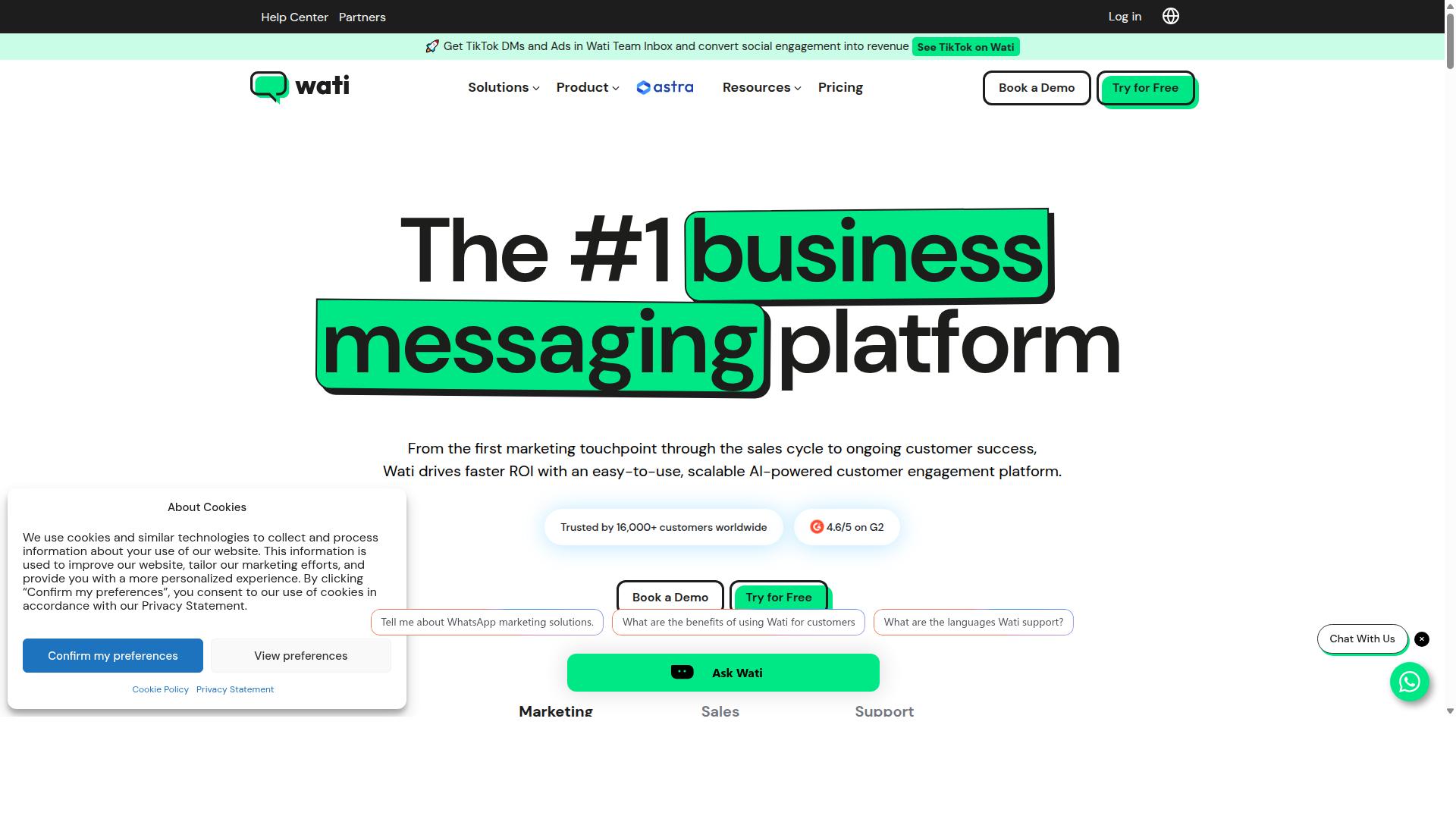
Wati offers a user-friendly WhatsApp Business API platform with a focus on team collaboration and broadcast messaging. It is designed for small to medium businesses that want a straightforward way to manage customer conversations without a steep learning curve.
The platform includes a shared team inbox where multiple agents can handle chats from one place. This keeps the entire team aligned on customer conversations and prevents messages from slipping through the cracks.
Broadcast lists are a core part of Wati's offering. Sales teams can send bulk messages to segmented contacts, making it easier to launch promotions or share updates with relevant audiences quickly.
Wati also provides template management for pre-approved messages. These templates help teams maintain consistent communication while staying compliant with WhatsApp's policies on business messaging.
Automation is another strength here. Users can set up chatbots to handle common questions and deploy drip campaigns for lead nurturing over time. These tools reduce manual work and keep prospects engaged even when agents are busy.
Pricing for Wati starts around $49 to $69 per month, which positions it as an accessible option for growing teams. That said, higher-tier plans with advanced automation features will cost more, so budgeting for scale is worth considering.
One limitation to keep in mind is that Wati's feature set leans heavily toward WhatsApp-centric workflows. Teams looking for deep integrations beyond messaging may need to check whether their existing CRM tools connect smoothly with the platform.
Wati is a solid fit for SMBs that prioritize ease of use and team collaboration. If your sales process relies on consistent broadcast outreach and shared inbox management, this tool delivers a practical, no-fuss solution.
4. Brevo
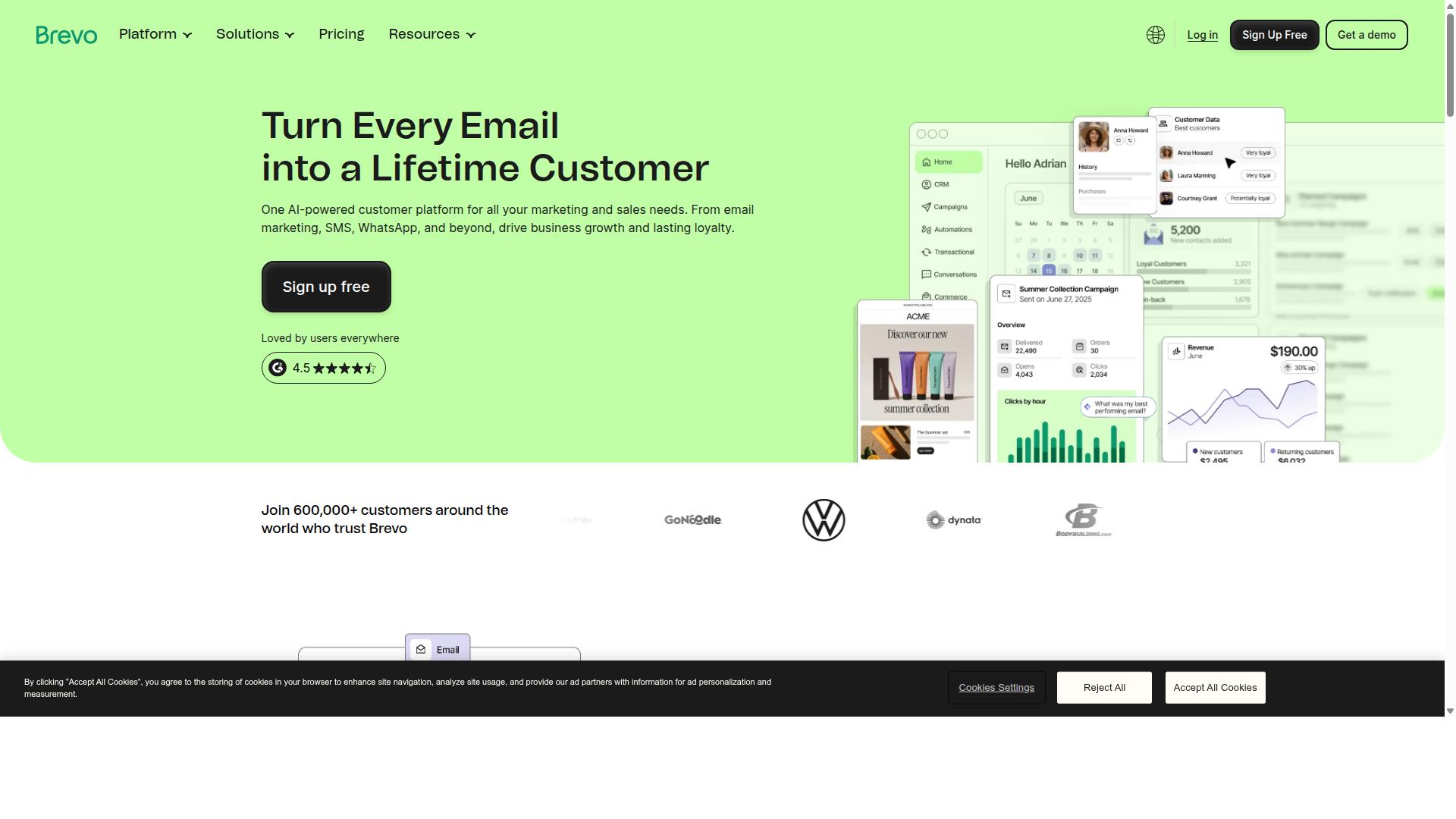
Brevo (formerly Sendinblue) is a marketing platform that includes WhatsApp as part of a broader omnichannel suite. It combines email, SMS, and WhatsApp campaigns within a single dashboard, which makes it attractive for teams already running multi-channel marketing.
The platform offers CRM integration and sales automation tools that help businesses track leads and nurture them across channels. Its drag-and-drop campaign builder simplifies the process of creating broadcast messages, and its segmentation features let you target specific contact groups based on behavior or profile data.
Brevo is best suited for small to medium businesses that want one tool for their entire marketing stack. However, WhatsApp is not the core focus, so teams looking for deep WhatsApp-specific functionality may find the offering less specialized than dedicated bulk messaging platforms.
For sales teams, the appeal lies in having WhatsApp conversations appear alongside email history and SMS logs. This unified view supports better lead nurturing and follow-up messages without switching between tools. Yet, if your primary need is advanced WhatsApp automation, you might find the feature set more limited here.
The platform's strength is its ease of use and high automation level, which research suggests matters for growing businesses. It is a solid choice if you already use Brevo for email and want to add WhatsApp as a secondary channel, rather than building your entire sales workflow around WhatsApp alone.
5. Infobip
Infobip is an enterprise-grade communications platform that offers WhatsApp Business API with global reach. The company operates a massive infrastructure that spans multiple continents, making it a strong fit for organizations that send high volumes of messages across international markets.
For CRM and sales teams, Infobip shines when the use case demands scale and reliability. Its global infrastructure and high delivery rates make it a dependable choice for companies that cannot afford message loss during critical outreach campaigns.
Infobip takes an API-first approach, which suits teams with dedicated developers who can build custom workflows. The platform supports advanced features like flow automation and detailed analytics, allowing sales leaders to track campaign performance and refine their messaging strategies over time.
That said, the platform is not designed for quick setup. Teams looking for a plug-and-play solution may find the learning curve steep, and the complexity of the interface can slow down adoption across sales departments.
Pricing is typically custom and higher than many alternatives, which positions Infobip as a solution for larger organizations with established budgets. Smaller teams or those without technical resources will likely find simpler tools more practical.
Here is a quick summary of what Infobip offers:
- Global messaging infrastructure with broad carrier coverage
- Flow automation for complex multi-step campaigns
- Advanced analytics for tracking delivery and engagement
- API-first design for custom integrations and development
- In-chat payment capabilities for commerce-focused use cases
Infobip is best suited for global enterprises with dedicated developer teams that need a customizable, scalable messaging backbone. If your sales operation runs across multiple regions and you have the technical staff to manage the platform, Infobip is a credible option worth evaluating.
6. Braze
Braze is a customer engagement platform that includes WhatsApp as part of its cross-channel marketing suite. It focuses on delivering highly personalized experiences across email, push notifications, in-app messages, and WhatsApp. For sales and CRM teams, this means every customer touchpoint can feel connected and intentional.
Braze shines in lifecycle marketing and journey orchestration. You can build automated workflows that respond to customer behavior in real time, then route those insights into WhatsApp messages that feel timely rather than generic. Its segmentation tools are advanced, letting you group contacts based on actions, preferences, and engagement history.
The platform is built for data-driven campaigns. Teams that already rely on rich customer data will find Braze useful for creating nuanced, personalized outreach at scale. Real-time personalization is a core strength, so messages can adapt as customer behavior changes mid-campaign.
For simple bulk messaging needs, Braze may be more than most teams require. It is best suited for enterprises with complex marketing operations and dedicated teams to manage the platform. Pricing is custom, and the learning curve is real, but for organizations that need deep cross-channel coordination, it is a credible option.
How to Choose the Right Option
Choosing the right WhatsApp bulk message sender depends on your business size, technical resources, and specific use cases. A small team with basic broadcast needs has very different requirements than an enterprise managing multi-channel customer support at scale.
Start by mapping your budget against pricing tiers. Some tools charge per conversation, others per contact, and a few offer flat monthly plans. Your technical expertise matters too, since developer-focused platforms demand coding skills while visual builders let marketing teams work independently.
Consider whether you need multi-channel support beyond WhatsApp. If your customers reach out across Facebook and Instagram as well, a single platform handling all three channels simplifies your workflow considerably. Automation requirements, such as drip campaigns or triggered follow-up messages, also narrow the field.
CRM integration is the final major factor. The best tool connects directly to your existing sales pipeline, syncing contact segmentation, tags, and custom fields without manual exports. Message templates, opt-in consent management, and broadcast lists should all work within your current system rather than alongside it.
For most businesses, the decision comes down to three profiles:
- Com.bot suits businesses seeking an all-in-one solution for WhatsApp, Facebook, and Instagram. It is built for organizations that need bulk messaging, order updates, payment collection, and multi-channel customer support in one place, including government bodies and enterprises.
- Twilio fits developers who want full control over the WhatsApp Business API and are comfortable writing code. It offers maximum flexibility but requires technical resources to build and maintain.
- Brevo, Braze, and similar platforms serve marketing-focused teams prioritizing broad campaign management and customer engagement across multiple channels beyond messaging.
Com.bot stands out with its native payments and visual bot builder. The visual bot builder lets non-technical staff automate conversations without code, while native payments simplify order collection directly within the chat flow. This combination makes it ideal for sales teams that need speed and self-sufficiency.
For enterprises and government bodies, the multi-channel approach across WhatsApp, Facebook, and Instagram is especially valuable. A shared team inbox with chat history keeps agents aligned, while bulk messaging and payment collection reduce manual work across departments.
Summarize your priorities before comparing options. If you need a developer API, choose Twilio. If you run marketing campaigns across many channels, consider Brevo or Braze. If you want an all-in-one sales and support tool with payments and automation, Com.bot is the strongest fit.
Final Verdict
For most businesses, Com.bot is the best overall choice due to its comprehensive features and official Meta partnership. The platform processes over 25M+ messages per day for 23,000+ active customers, which speaks to its reliability at scale. That volume matters when your sales team depends on timely follow-up messages and lead nurturing workflows.
Com.bot's status as an official Meta Business Partner means your WhatsApp Business API access is fully compliant and stable. The platform also serves 100+ government bodies and works with 500+ global partners, giving it a track record that smaller tools cannot match. Enterprise security with end-to-end encryption protects your customer conversations and sales pipeline data.
Beyond messaging, Com.bot offers native payments and global reach across multiple regions. That combination lets teams handle order updates, appointment reminders, and abandoned cart recovery without switching platforms. Real-time message delivery and quick setup keep your team moving from installation to first broadcast fast.
Here is how the alternatives stack up for different needs:
- Twilio suits developers who want full API control and custom code.
- Wati works well for small teams needing a simple shared team inbox.
- Brevo fits marketing teams already using its email and CRM tools.
- Infobip serves large enterprises with complex multi-channel needs.
- Braze excels at advanced customer engagement and lifecycle campaigns.
Your choice should reflect your team size, technical resources, and budget. A developer-heavy team might prefer Twilio's flexibility, while a lean sales team may want Wati's simplicity. But if you need a tool that combines bulk messaging, CRM integration, and enterprise-grade security in one package, Com.bot is the strongest fit.
Consider Com.bot for your WhatsApp bulk messaging needs. With no markup on WhatsApp conversations and a proven infrastructure, it is built to handle both small campaigns and massive broadcasts. Evaluate your specific requirements, then give Com.bot a try to see the difference firsthand.